
.png)
When planning your move from the UK to Australia, one of the biggest decisions is what to ship versus what to buy new. Since shipping costs are primarily based on the volume of goods, evaluating the compatibility, cost, and personal value of your possessions is essential for a cost-effective move.
The good news is that Australia allows most household goods to be imported duty-free, as long as you meet eligibility criteria. Understanding those rules and weighing up practical, financial and emotional factors will help you make confident decisions about what’s worth shipping.
%20-%20Loading.jpg?width=1200&height=800&name=June%2024%20(11)%20-%20Loading.jpg)
How to Decide What to Take with You
When deciding what to ship to Australia, ask yourself:
- What can I import duty-free?
- What can I legally take under Australian Border Force and biosecurity rules?
- What items might not work or fit in my new home?
- Is it cheaper to ship or to buy new?
- How stressful or time-consuming will it be to replace items after I arrive?
- How important is it to have my familiar belongings around me while settling in?
Your answers will depend on your lifestyle, budget, and how permanent your move feels — but these guiding points can help shape your decision.
Duty-Free Allowances for Household Goods
The Australian Government allows duty-free import of most household goods for:
- Returning Australian citizens, and
- Non-citizens with long-stay or permanent residence visas
You’ll need to have lived outside Australia for at least 12 months, and the items must be for your personal use.
That means you can usually take most of your furniture, clothing, and personal effects.
However, some items don’t qualify for duty-free import — including cars, tobacco products, alcohol, and certain antiques or specialist items.
Always check your individual situation with your international removal company to avoid surprises.
what can't you ship to australia?
Australia takes biosecurity very seriously to protect its unique environment and agriculture. Certain items are restricted or prohibited, and others may require inspection, cleaning, or treatment before they can enter the country.
👉 Read our detailed guide:
What You Can and Can’t Ship to Australia: Customs and Biosecurity Rules Explained
That article covers:
- Prohibited and restricted items
- Common household goods that raise biosecurity concerns
- How inspections and fees work
- Tips to avoid delays and extra costs
Will UK items work in Australia?
Before packing, check these key areas where UK and Australian standards differ.
Electrical Goods: Voltage is the Same, Plugs and Amps are Not 🔌
The good news is that Australia’s power system runs on the same voltage (230V) and frequency (50Hz) as the UK, meaning most standard electronics will function. However, you will need a plug adapter OR ideally for long term use a professional plug replacement.
Crucial: Whilst voltage is the same, UK plugs are compatible with up to 13 amps, while in Australia that's lower at 10 amps. This means high-wattage appliances (often those with heating elements) may overload and trip sockets so it's important to check specific items before packing.
Large White Goods
Items like fridges, freezers, washing machines etc. will typically work with a plug change and are often worth shipping due to the high cost to replace. However you should also:
- Check the item will fit in your new Australian home's space (especially if you have a fitted kitchen or built-in spaces in a utility room).
- Check the connection points (e.g., water inlet/outlet hoses) are compatible with Australian standards.
- Thoroughly clean all items, especially fridges, freezers, and vacuum cleaners, to comply with biosecurity rules.
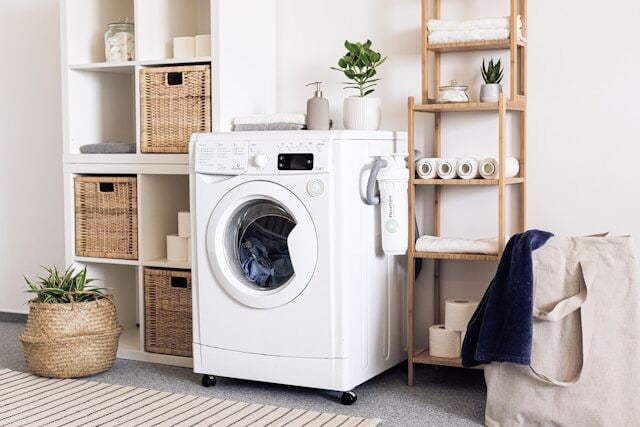 Photo by PlanetCare on Unsplash
TVs, Consoles and Media
Your TV will likely work with a simple setting change (check your TV's manual for PAL-B/G compatibility) but sound processing can be an issue and you may not receive all local channels. Check your specific model online before deciding, for some models you can use a SCART connection at the back to convert to Australian standards.
DVD players and games consoles will usually work fine as long as there’s the option to plug a video or audio cable into the back of the TV, but it is worth noting that Australia also have a different region code for playing DVDs. The UK runs on Region 2, Australia is Region 4; therefore any DVDs bought here will work on your existing DVD player, but new ones bought out there won’t. The only way around this is to either try and convert your existing DVD player to be region-free, or buy a multi-region DVD player before you leave/when you get to the other end. You may have the same problem when it comes to playing computer games too.
⚠️ A note on Batteries ⚠️
Batteries, particularly Lithium-ION batteries, can post a big safety risk due to fires. The British Association of Removers strongly recommends removing lithium-items from your shipment. If you wish these to be included it may require declaring them as hazardous goods which involves additional fees and documentation. We also recommend removing standard batteries from devices before shipping to avoid leaking during transit, which will likely damage your item.
Furniture
Typically, Australian houses are slightly bigger than in the UK, so you might want to bring as much furniture as you can to fill the new space you have as comparatively speaking, buying from scratch in Australia tends to be more expensive than in the UK.
If you’re taking garden furniture then the most important thing to ensure is that it’s CLEAN as regulations around importing outdoor items are particularly strict. Make sure there are no traces of grass or soil on any outdoor items you’re bringing with you (tents, tent pegs, trampolines, benches, sun loungers, toys etc.)
You should also check the surfaces of any timber items for signs of insect infestation – if present, then you either need to discard them from the move entirely, or treat thoroughly prior to the move.
 Photo by Phillip Goldsberry on Unsplash
The Core Decision: Ship vs. Buy New?
After factoring in replacement of items that won't work, this is the central question for anyone moving abroad and largely comes down to comparing the cost and hassle of shipping against the cost and stress of replacement.
The Three Key Considerations 💡
-
Cost of Replacement vs. Cost of Shipping: According to Admiral, a leading UK Insurer, the average value of a 3 bedroom house contents is just over £41,000. If the cost to replace everything you own when you get there was similar then this would be far higher than the cost of shipping from the UK to Australia. In many cases, items are more expensive in Australia than here in the UK, so it's important to do your research.
-
The Value of Familiarity: Having your own furniture and familiar possessions around you can significantly ease the stress of adjusting to a new country, especially for families with children.
-
The Stress and Time of Buying New: Setting up a home from scratch is time-consuming, requires managing deliveries, and may necessitate costly temporary furnished accommodation upon arrival.
Evaluating the Cost Comparison
It's worth taking some time to follow this simple process to evaluate the most cost-effective solution for your non-essential items:
Step 1: Get a Shipping Quote
Get a free, no-obligation quote from an international removal company for both options:
- Quote A: Shipping everything you own.
- Quote B: Shipping only your absolute essentials (e.g., clothes, personal items, specific sentimental/expensive items).

Step 2: Research Replacement Costs in Australia
- Make a list of the items you are considering not shipping
- Research cost of replacement in Australia
- Evaluate if you could sell your used item in the UK to contribute toward replacement cost
- Deduct money from selling used items from the replacement costs to get your cost of replacement. For example if you had an Ikea 3 seater sofa you could buy this new in Australia for $699 (£396). If you could sell your old one in the UK for £100 then the cost to replace is £296.
Don't forget to be realistic in researching new items - look for replacements you'd be happy with, that are to your taste and are available in the area you're moving to.
Step 3: Compare the costs
Once you've got these two figures, you can do an easy comparison - here's a simple example:
|
Ship Everything |
Ship Essentials & Buy New |
|
|
Shipping Cost |
£9,000 |
£4,000 |
|
Replacement Cost |
£0 |
£10,000 |
|
Total Cost |
£9,000 |
£14,000 |
In this example, not only is shipping the least stressful option, but it is also significantly more cost-effective.
Consider the stress of buying everything new when you get to Australia
If you love shopping and won't be starting work right away when you arrive, then this may be not be a concern to you, but if that's not the case think carefully about the task of buying everything new.
What will you do for furniture while you're waiting for your new things to arrive? Will you need to stay in temporary furnished accommodation and how much will this cost? Will you have credit in place if you don't have funds to buy outright? Are the shops you need close by? Are you good at making decisions and visualising what will work well in your new home? Do you have time to find the best stores and the best prices? Can you take time off work to take delivery?
Don't forget the hassle of getting rid of everything in the UK too. If you're selling things take into account the time required to list your items, negotiate with buyers and arrange delivery/collection. If you're disposing of items take into account the cost/time required to do this before move day.
Consider the value of having your own things around you in your new home
 Photo by Alexander Dummer
Don't underestimate the power of familiarity when making your new house feel like 'home', in a country where everything is very new.
For some people this doesn't matter and lots of new stuff is far more exciting, but for others the transition to a completely new life in a new country is made a little easier by having their familiar items around them while they settle in, particularly when you have children.
Get Expert Help Planning What to Ship
Every move is unique, and the right choice depends on your budget, timeline, and priorities.
A professional international removal company can help you:
- Understand customs and quarantine regulations
- Estimate the real cost of shipping
- Identify items that may cause inspection delays
- Plan the most efficient packing and shipping method
👉 Need advice on what’s worth shipping?
Get a free international moving quote to Australia and speak to one of our experienced team.